Daniel Koh and Data Chord: data, education and responsibility in the age of AI
From Singapore and Osaka to collaboration with Just Do It. Data Chord’s history, Daniel Koh’s research, PCiDS programmes, Screen LMS and his work on resilience to disinformation through CODI-DW.
Share article ↗
An editorial feature based on company and university materials and research publications. Data Chord collaborates with the Support Center Association “Just Do It”, TRUTH’s publisher; Daniel Koh is its honorary ambassador and a CODI-DW team member. Product claims are attributed to the company. Information reviewed on 30 October 2026. Covers are AI-assisted editorial compositions based on Daniel’s portrait; training photographs come from Data Chord’s website.
Company at a glance
- Founder & Managing Director
- Dr Daniel Koh Kian Wei
- Established
- 2024; incorporation date reported by the founder: 30 August 2024
- Focus
- Data science, AI, analytics, training, cybersecurity
- Programmes & platform
- PCiDS™ · Apprenticeship · Screen LMS™
- Civil-society partner
- Support Center Association “Just Do It”
The value of data depends on what people can do with it: the questions they ask, the way they test an answer and their ability to recognise the limits of what they know. In Dr Daniel Koh’s work, this perspective connects entrepreneurship, education and research into human behaviour. His Singapore-based company, Data Chord, develops analytics consulting and training programmes, while collaboration with the Support Center Association “Just Do It” brings technological expertise into the field of societal resilience. [1][14][15]
This story matters at a time when AI has become an easily accessible work tool. Producing a report takes less and less time. Determining whether it addresses the right question still requires preparation. Daniel’s profile offers a way to examine this human dimension of technological change: the people who must interpret analytical results, understand risk and make decisions under uncertainty.
Daniel Koh: researcher, educator and entrepreneur
Dr Daniel Koh Kian Wei is a Singaporean data scientist and Managing Director of Data Chord and Japan-based Koh & Associates. SSBM Geneva identifies him as a Doctor of Business Administration graduate who combined research with managing the two companies. Before his doctoral studies, he led a Data Science and Data Management department at a Singapore software company. In the university’s interview, he explained how research methodology strengthens his approach to data-informed leadership. [3]
The portfolio published by ITPC at Saigon Technology University describes his marketing education at Singapore University of Social Sciences, further studies at Nanyang Business School and DBA at SSBM. His company biography also lists teaching experience at Singapore Management University, Singapore University of Social Sciences and the University of Newcastle. Together, these areas describe a career connecting consumer behaviour with technological practice. [4][7]
The meeting of two perspectives is especially interesting here. Marketing asks about motivations and choices. Analytics asks what evidence supports an answer. An educator must then explain the process to someone who did not design it. Moving between these tasks is a useful capability in a business as well as in a civil-society organisation.
Data Chord’s beginnings: Singapore and the Osaka connection
Data Chord was established in 2024. In his September 2025 article, Daniel gives 30 August 2024 as its incorporation date and lists UEN 202435637C. The university portfolio describes the company as an expansion following the founding of Koh & Associates in Osaka in 2023. This is the history of two distinct entities connected by their founder and an interest in business applications of data. [2][4]
The company name draws on the musical idea of a chord. Its brand explanation describes harmony between management, advisers, clients and trainees, and partners. The four elements of its logo represent these groups. [6] The metaphor has a practical meaning: an analytics project depends on alignment between a business need, a research method, data preparation and the eventual use of the result.
The history of a young company needs to be read at the right scale. Its establishment date describes the age of the organisation; its founder’s experience includes earlier work and research. Both matter to a prospective partner. A useful assessment examines specific programmes, published outputs and the institutions involved in delivering them.
What the company does: three areas of activity
Data Chord presents three main areas of activity: professional certification and training, data-driven consulting, and executive education. Its consulting offer includes predictive modelling, ETL automation and dashboard reporting. Programmes for leaders address the use of analytics in strategy and preparing teams for digital transformation. [5]
An illustrative organisational scenario helps distinguish these services. A team gathering information from several systems needs an orderly flow of data. A team hoping to forecast demand must establish what it wants to predict and how accurate the prediction must be. Managers using a new report need clear presentation and responsibility for interpretation. These are editorial examples of problem types, rather than descriptions of specific company contracts.
In this type of work, usefulness emerges when analysis changes what people do. A chart should help resolve a question. Automation should reduce repetitive effort while retaining quality controls. Training should enable someone to complete a task independently. These criteria offer a more concrete basis for evaluation than a list of technologies alone.
PCiDS: from learning tools to applying knowledge
An important part of the company’s work is the Professional Certificate in Data Science, PCiDS™. Its Cybersecurity pathway combines AI and analytics foundations with data protection, integration, machine learning, graph analysis and visualisation. The company’s programme includes eight teaching modules and a final project assessed by an expert panel. Delivery partners determine schedules and fees. [7]
The value of project work lies in connecting stages that are often taught separately. Data needs preparation, a method needs justification and a result needs communication. An early mistake can undermine everything that follows. A well-designed project therefore also evaluates decisions along the way: what was excluded, why a method was chosen and which limitations remain.
Saigon Technology University: a partnership documented by both sides
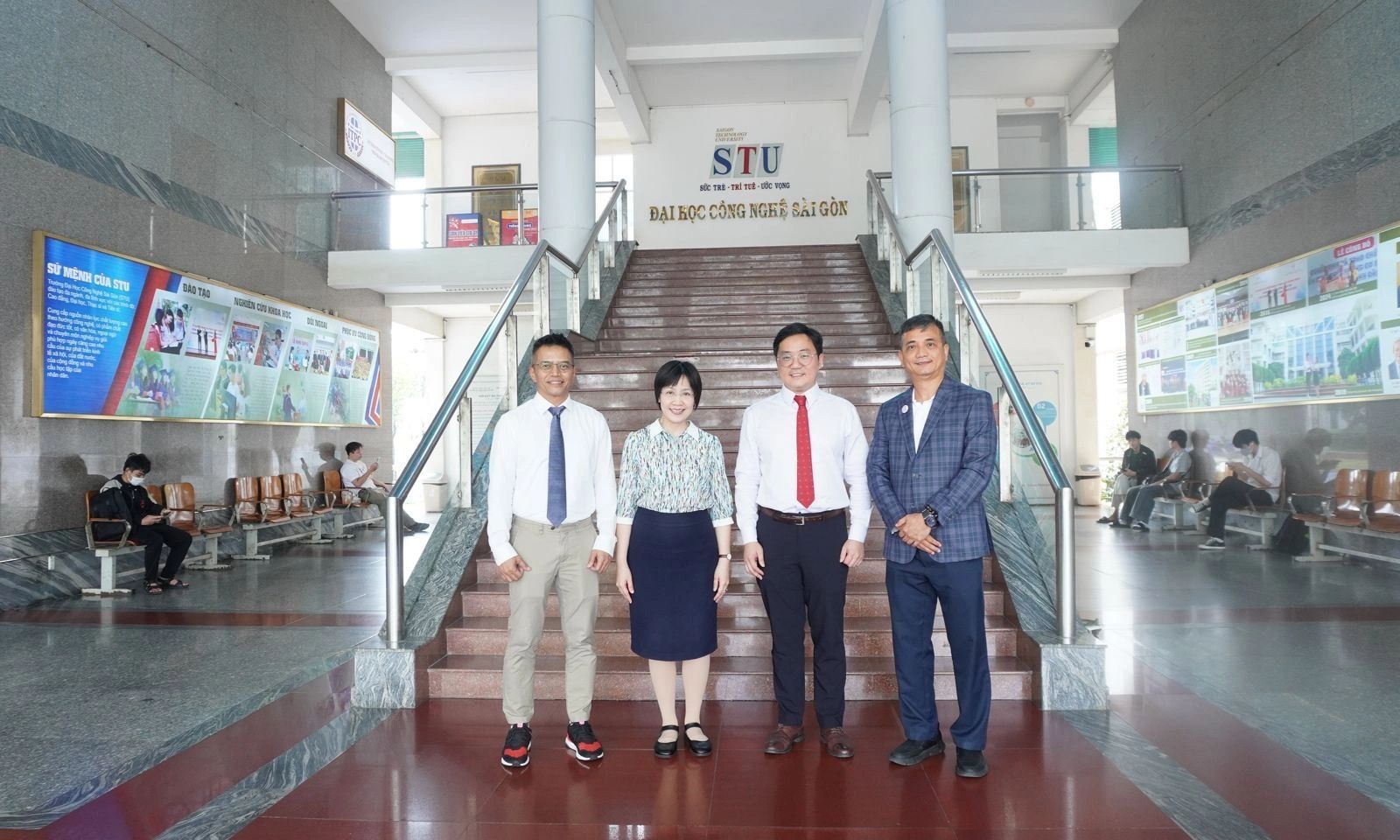
The partnership with Saigon Technology University is also documented by the university’s International Training Program Center. ITPC describes joint AI and cybersecurity training combining online learning with in-person sessions. Its materials set out a progression from foundations to a capstone project and identify Daniel Koh among the instructors. This provides a concrete example of the company’s programme entering an academic environment in Vietnam. [8]
Programme accreditation deserves a precise reading. Current Data Chord and ITPC materials identify the International Society for Data Science and Analytics, ISDSA. [7][8] A professional certificate should be assessed against its curriculum, assessment process and the learner’s needs. Acceptance in a particular recruitment or academic procedure depends on the institution making that decision; a programme description does not replace its requirements.
Malaysia, Japan and learning in real settings
A Data Chord announcement dated 26 November 2025 introduced PCiDS Marketing in Klang, Malaysia, in partnership with SRKK Group, with an inaugural intake planned from 4 February 2026. Its description included campaign analytics, segmentation, modelling and assessment of risks from AI-generated content. This is a documented company announcement; the release itself does not establish graduate numbers or the outcomes of individual cohorts. [9]
A different kind of evidence comes from Osaka-based Hybrid Marketing. The partner reports delivering a “Hybrid Marketing & Digital Strategy” module on 19–26 December 2025 for a participant in the Data Chord Apprenticeship Program, working with Koh & Associates. Activities included discussion of marketing foundations and field research in Osaka to understand local business practices. [10]
This example illustrates why international education should mean more than English-language materials. The same dataset may require a different interpretation in a different social setting. Customer behaviour, the meaning of a message and service expectations depend on context. Fieldwork can test whether an analyst understands the people whose behaviour they seek to describe.
Screen LMS: the company also develops learning tools
On 29 July 2026, Data Chord announced Screen LMS™. According to its release, the platform combines a proprietary adaptive AI engine with a visual activity builder. The company describes learning pathways responsive to participant progress, course creation and integrated payments. It also announced a showcase through its STU collaboration. These are the developer’s statements about platform capabilities and plans. [11]
From an educational perspective, adaptation is useful when it helps identify an appropriate next step. A learner may need to revisit a concept, see another example or attempt a harder task. A platform can help an instructor notice that need. Quality still depends on assessment criteria, accessible materials and the ability to explain a recommendation. These questions are relevant to any system using AI in learning.
Research: human behaviour within a data model
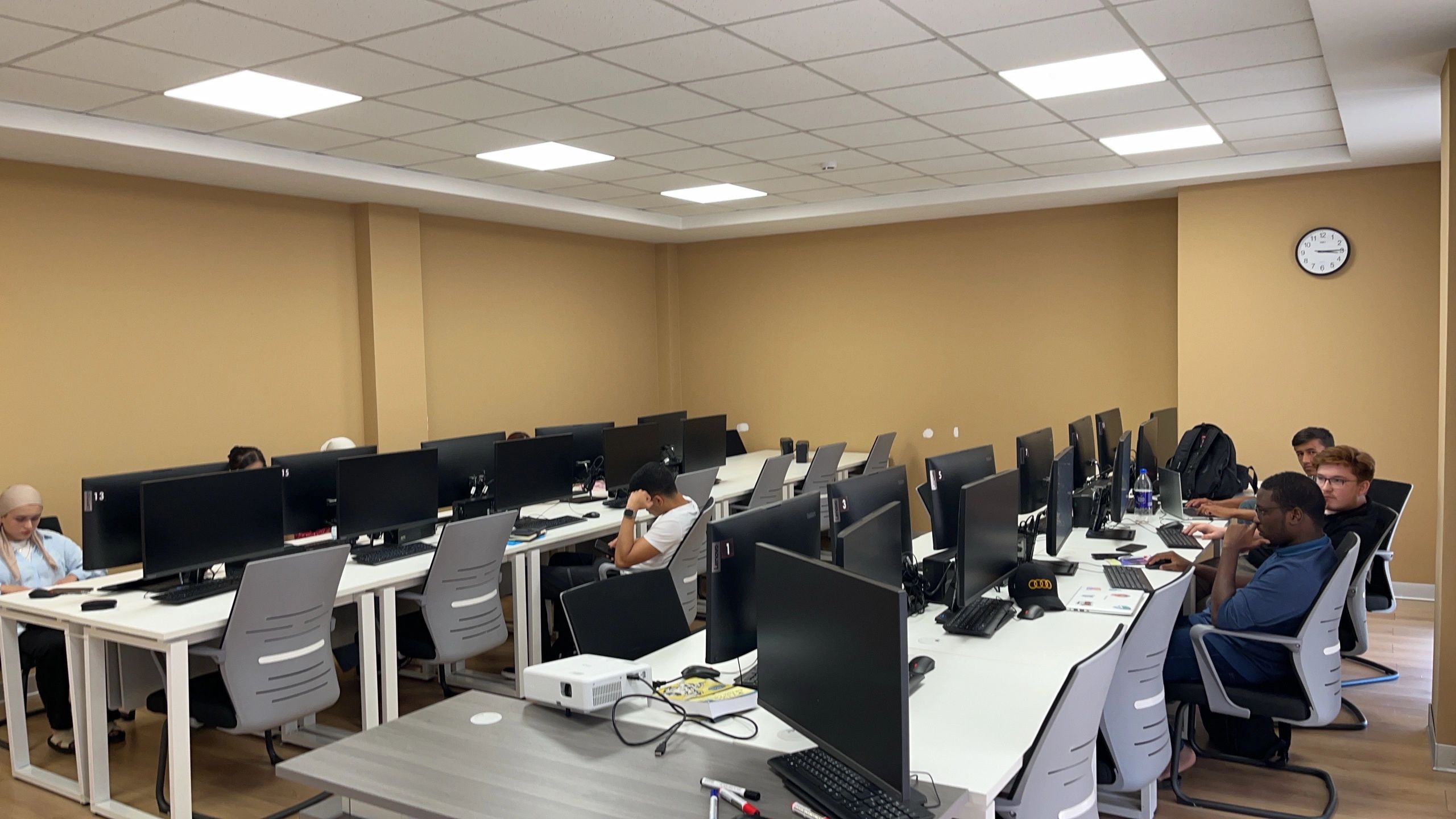
Daniel authored “Loss Aversion Distribution: The Science Behind Loss Aversion Exhibited by Sellers of Perishable Good”, published in the Journal of Behavioral Data Science in 2024. The paper proposes a probability model of time-varying loss aversion involving perishable goods. In 2025, he and Zulkifli Jalil published an application framework discussing LAD in marketing, education and technology adoption. [12][13]
The second paper considers pricing decisions, student behaviour around deadlines and employee resistance to new tools. [13] These are research proposals whose usefulness needs testing in the relevant setting. For Daniel’s profile, their significance lies in connecting statistics with motivation: why does someone choose a particular action at a particular time?
That question has wider educational value. An analyst learns to distinguish an observation from an explanation. Detecting a pattern begins the work; checking alternative interpretations follows. Understanding public information demands a similar discipline. A compelling narrative can sound credible, while still requiring questions about evidence, the scope of its conclusion and the conditions under which that conclusion no longer holds.
Data Chord and Just Do It: collaboration through CODI-DW
Data Chord’s collaboration with the Support Center Association “Just Do It” is documented in the organisation’s materials on “Combating Disinformation in the Digital World Training”. Its publication dated 23 September 2025 describes the initiative as a result of the two organisations’ joint engagement. CODI’s team page lists Daniel Koh as Project Lead / Trainer and Ivan-Oleksandr Yakymiv as Administration Lead. [14][15]
The partnership brings different kinds of experience together. The company contributes a perspective on data and technical learning. A civil-society organisation understands the questions and barriers encountered by people receiving support. Working together can help translate specialist concepts into exercises accessible to educators, journalists, civic practitioners and people outside technology. This is an editorial assessment of the partnership’s potential, rather than a statement of measured programme outcomes.
As president of the Association, Ivan connects the collaboration with Just Do It’s broader work. Daniel’s role brings an analytical perspective to discussions of disinformation. A participant should understand the difference between a source, processed data and an interpretation. They should also be able to recognise that a precise number can answer a poorly framed question.
Honorary ambassador of the Association
Daniel Koh is also an honorary ambassador of the Support Center Association “Just Do It”, a role stated in the profile published by the organisation. [16] It is a position within the Association’s community, connected with social engagement and expert collaboration. It sits alongside his professional responsibilities at Data Chord and his work within the CODI-DW team.
For an organisation working with an international expert network, a central benefit is dialogue across specialisms. A practitioner working directly with communities can identify a real difficulty. A researcher can help design a way to understand it. An educator can translate the diagnosis into an exercise. Such collaboration can build lasting capability beyond an initial burst of interest.
The analytical craft: before a model is built
A company combining consulting and education raises an important question about organisational readiness for data work. In our editorial assessment, the process should begin with the decision that analysis is meant to support. Detecting irregular transactions differs from evaluating training or forecasting demand. Once the purpose is clear, an organisation can determine which information it needs and whether it actually has it.
The second step concerns input quality. Two tables may use the same field name with different meanings. A missing value may mean that no event occurred, that measurement failed or that a form was left incomplete. Without distinguishing these cases, even a carefully built model can operate on a misleading representation of reality. Analytical education offers a chance to practise these distinctions before mistakes become embedded in everyday work.
The third step is accountability for the result. Who checks whether a report is current? Who can challenge a recommendation? How will an organisation detect changed conditions under which a model no longer performs adequately? These questions extend beyond code. They connect technical capability with management and show why preparing leaders and preparing analysts should complement each other.
Capabilities that travel across sectors
An analyst’s most transferable skill is formulating a testable question. Saying “our communication works better” is too general. A team needs to define improvement, its comparison point and the observation period. A civil-society organisation may focus on whether people understand information. A business may focus on reducing errors or response times. Technology can help in both settings when the objective is well defined.
A second capability is communicating uncertainty. A readable report should distinguish established findings from conclusions that depend on an assumption. Explaining limitations helps a reader match the weight of a decision to the strength of evidence. This matters especially when analysis concerns people, including their access to services, learning opportunities or assessed needs. Precise language becomes part of responsible data use.
A third is the ability to update a position. New information may require a revised model, changed teaching material or a correction to an earlier conclusion. Collaboration between an analytics company and a civil-society organisation creates room to practise that habit across different problems. For readers assessing Data Chord, this is a useful question: which behaviours and capabilities remain with a participant after a programme ends?
Partnership requires a shared definition of outcomes
When planning collaboration with a company such as Data Chord, a partner should define the audience, entry level and final task. A management course needs different language from a workshop for people learning to code. A social initiative also needs to consider access to time, equipment and materials. These practical factors can determine participation as strongly as the appeal of a curriculum.
Agreeing how progress will be assessed is equally important. Enrolment counts show interest; completion counts show progression through a programme. The ability to perform a task independently needs its own assessment. A clearly described outcome enables learners, instructors and partners to judge whether their work addresses a real need. This is a natural meeting point for analytics, education and social responsibility.
Education as a common language for business and societal resilience
Data Chord’s brochure distinguishes its Apprenticeship Program, PCiDS certification and Social Impact Training Program. The latter is described as addressing digital literacy, information awareness, community engagement and ethical leadership. [17] This suggests an attempt to connect technology education with questions about who knowledge serves and how it is used in social relationships.
In business, a well-prepared employee should examine a model recommendation before making an important decision. In public life, an informed reader should examine a claim before sharing it. These situations differ in responsibility and context, but require similar habits: pausing, checking sources, comparing explanations and remaining open to correction. This is where analytical education can meet a social mission.
The continuing value of Data Chord’s work and its collaboration with Just Do It can be assessed through concrete outcomes: project quality, accessibility of learning, transparent assessment and participants’ capabilities after training. Daniel Koh’s story points towards an approach connecting entrepreneurship with sharing knowledge. Its practical test is whether people can use that knowledge to understand situations more clearly and make better-informed decisions.

Contact and further information
Data Chord — company contact
datachord.sg ↗
daniel.koh@datachord.sg
Sources and background
- Data Chord — oficjalna strona firmy ↗
- Daniel Koh — What is Data Science?, 24.09.2025; historia i data rejestracji ↗
- SSBM Geneva — From Data to Leadership: Daniel Koh Kian Wei’s DBA Journey ↗
- ITPC / STU — Professional Portfolio: Dr. Daniel Koh, materiały prowadzących ↗
- Data Chord — Why Data Chord? Oferta doradcza i szkolenia liderów ↗
- Data Chord — About: misja, zarząd i rada doradcza ↗
- Data Chord — PCiDS (Cybersecurity), program i zasady certyfikacji ↗
- ITPC / Saigon Technology University — Professional certificate in AI & Cybersecurity ↗
- Data Chord — komunikat o PCiDS Marketing i współpracy z SRKK, 26.11.2025 ↗
- Hybrid Marketing — relacja z modułu Apprenticeship w Osace, 19–26.12.2025 ↗
- Data Chord — komunikat o Screen LMS, 29.07.2026 ↗
- Koh, D. (2024), Loss Aversion Distribution, Journal of Behavioral Data Science 4(1), 63–80 ↗
- Koh, D. & Jalil, Z. (2025), An Application Framework for the Loss Aversion Distribution ↗
- CODI Institute — zespół, rola Project Lead / Trainer ↗
- Just Do It — współpraca z Data Chord przy CODI-DW, 23.09.2025 ↗
- Just Do It — Common Path; profil i rola honorowego ambasadora ↗
- Data Chord — broszura programowa: Apprenticeship i Social Impact Training ↗